
'Significantly, Foreign Secretary Gokhale was received at very high level in Beijing.' 'It only shows China's keenness to move forward and put the relationship on a 'win-win' footing,' says Ambassador M K Bhadrakumar.

The Chinese coercion and aggression spans the globe, but it is most acute in the Indo-Pacific, it said.
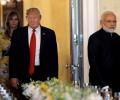
The White House said the two leaders also pledged to continue working together to enhance security and prosperity in the Indo-Pacific region.
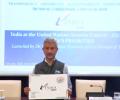
If elected, it would be India's eighth term on the UN Security Council and this two-year tenure will start in January 2021.

United States President Barack Obama is impressed with Prime Minister Narendra Modi's vision of the big things he wants India to achieve.

China is pulling out all the stops to give a 'state visit-plus' reception to Trump on his maiden visit.

Among others, China is developing the strategically located Gwadar port in Balochistan, which is aimed towards having a military presence, says a Pentagon report
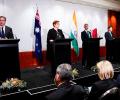
India is a driving force of the Quad and an engine for regional growth, said the White House, days after foreign ministers of the countries, which are part of the grouping, met in Melbourne.

'As in the Panchatantra tale of the cat and the monkeys, it is possible for the clever swing State to play off the two competing powers.'

Pakistan-based terrorist outfits like Lashkar-e-Tayiba are likely to turn their attention to India with the drawdown of US forces from Afghanistan, a top Pentagon commander has told lawmakers.
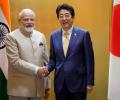
With the signing of the pact, the Quad grouping of India, Japan, Australia and the US is set to gain more heft now, notes Dr Rajaram Panda.

'Both Russia and the USA seek New Delhi's friendship, because for both -- Russia and the USA -- India is a certain counterbalance to China.'
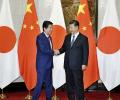
'Both Japan and China face a common challenge: How to deal with Trump.' 'The trade war with the US seems to have facilitated/hastened Abe's China visit, the first by a Japanese prime minister since 2011,' points out Dr Rajaram Panda.

"This will be the first dinner for a foreign dignitary at the White House under this administration. So, we think that's very significant," a senior administration official told reporters at the White House on the eve of Modi's arrival.

Joe Biden will embark on his maiden visit to India as United States Vice President on July 22 to discuss key bilateral issues, including trade, energy and defence, to make Indo-US ties the most important strategic partnership of the 21st century.

United States Secretary of State Antony Blinken has said that he had a productive meeting with visiting External Affairs Minister S Jaishankar during which they discussed the bilateral ties, COVID-19 relief efforts, India-China border situation and Afghanistan and vowed to work together to address areas of shared concern.

Vietnam is a key player in India's act east policy under Prime Minister Narendra Modi. From India's perspective, a strategic partnership with Vietnam will only deepen political, economic, and security ties and be a bulwark against China, say Melissa S Hersh and Dr Ajey Lele
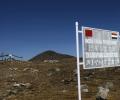
The resolution condemns additional Chinese provocations, including China's use of military force to change the status quo along the Line of Actual Control, construction of villages in contested areas, publication of maps with Mandarin-language names for cities and features in the Indian state of Arunachal Pradesh, and expansion of Beijing's territorial claims in Bhutan.
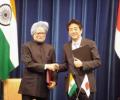
India's commitment to an open and plural security architecture attests to the fact that Asia's transition is a dynamic of both power & identity, says Zorawar Daulet Singh
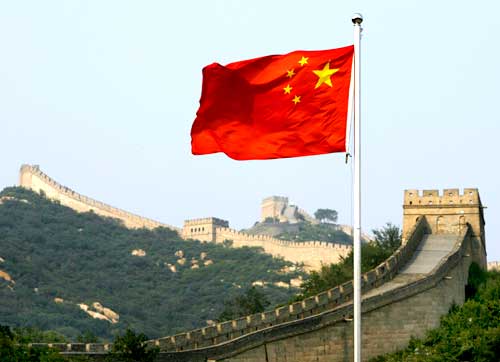
With Modi's visit, New Delhi hopes there will be breakthroughs in many aspects, especially business and trade, security cooperation and nuclear issues.
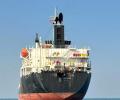
The world needs to wake up to this new dimension of war at sea and be prepared to face the 'unknown enemy' who have the advantage of attacking at their choice of location and time, cautions Commodore Venugopal Menon (retd).

A day after North Atlantic Treaty Organisation forces transferred security responsibilities to Afghan authorities, the United States has said will continue to work with India, Pakistan and Afghanistan to further strengthen the regional security.
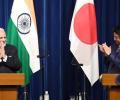
'Relations between India and Japan are robust and devoid of either shadow of history or any irritant.' 'In fact, there is plenty of warmth and goodwill earned over history. There are no negatives but only opportunities,' notes Dr Rajaram Panda.

Outlining seven principles of engagement for closer cooperation between India and China, Prime Minister Manmohan Singh on Thursday said the two countries should show sensitivity to each other's interests and sovereignty and move quickly to resolve the boundary issue.

"We value our partnership with India, and we've been increasing it and doing a lot more, over time. They have the same security challenge, primary security challenger that we do, and it's real on their northern border," Admiral John Christopher Aquilino, commander of United States Indo-Pacific Command, told members of the House Armed Services Committee during a hearing on Indo-Pacific National Security Challenges.
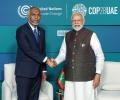
'India should respect Maldivian nationalism and their desire to be not over-dependent on India.' 'India should not behave like a big brother towards Maldives as many times, we tend to behave like that.'
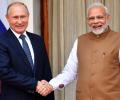
'Washington senses that the anchor sheet of India's strategic autonomy lies in its longstanding partnership with Russia, which remains firm and immutable despite the changes in world politics in the post-Cold War era,' notes Ambassador M K Bhadrakumar.<

With the situation in Ladakh tense and no resolution in sight the trigger to take the India-US relationship to a transformational one is already there, observes Lieutenant General Syed Ata Hasnain (retd).

'It is unrealistic to expect that security dilemmas and strategic distrust to disappear or even diminish any time soon,' says Rup Narayan Das.

Had India agreed to join the trade pact, Indian markets would have been flooded with cheap Chinese products.

India is no longer shying away from playing a role on the regional and international stages and is willing to don a bigger role in regional politics. It is showing traits of a responsible stakeholder in the regional security dynamics, says Dr Rahul Mishra.

He warned that Pakistan-supported terrorist groups would continue to carry out attacks inside India.
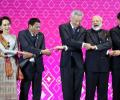
The prime minister also welcomed convergence of views between India and ASEAN for cooperation in the Indo-Pacific region.
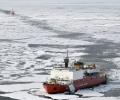
As the ice-covered parts of the Arctic Ocean melt due to climate change, China has flagged its interest to take part in building 'Polar Silk Road', raising prospects for the emergence of a new sea route.
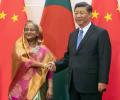
'Beijing is comfortable with Hasina's pragmatism -- perceived as 'pro-India', but staying out of Indian orbit and receptive to forging close ties with China and yet, siding with neither neighbour,' says Ambassador M K Bhadrakumar.

'... For the India-US relationship to continue its positive trajectory, it will require India to adapt to a different approach.' Nisha Desai Biswal -- who as the Obama administration's point person for South Asia was in the inner circle of all the Obama-Modi Summits -- tells Rediff.com's Monali Sarkar why she is hopeful that India and the US are on an irreversible forward course.
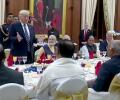
'This was the first ever visit by a President in a re-election year so it sent a strong signal of the priority of the relationship and the desire to continue to strengthen it.'

Deborah Lee James will travel to India later this month as part of a maiden visit to four Asian countries that would also take her to Indonesia, Singapore and the Philippines and will discuss the situation in the South China sea as well as the growing threat of terrorism.

Modi said it is his 12th meeting with Abe since he first visited Japan as prime minister in September 2014

"The deal is being implemented. We witnessed attempts on the part of the US to undermine this cooperation and make India obey the American orders to follow the American vision of how this region should be developed," Russian Foreign Minister Sergey Lavrov said.
